Key facts
- Most at risk
- Homes built before 1970, according to the Australian Government's Lead Alert guide. Later homes may also have paint containing lead.
- Who is most vulnerable
- Young children and pregnant women.
- What creates the hazard
- Dust and fumes from dry sanding, scraping and heat stripping.
- First step
- Test before disturbing old paint.
1Where it is found
The Australian Government's Lead Alert guide says homes built before 1970 are most at risk, though more recent homes may also have paint containing lead. In practice that covers most of the Victorian, Edwardian, interwar and post-war housing across Melbourne's inner and middle suburbs.
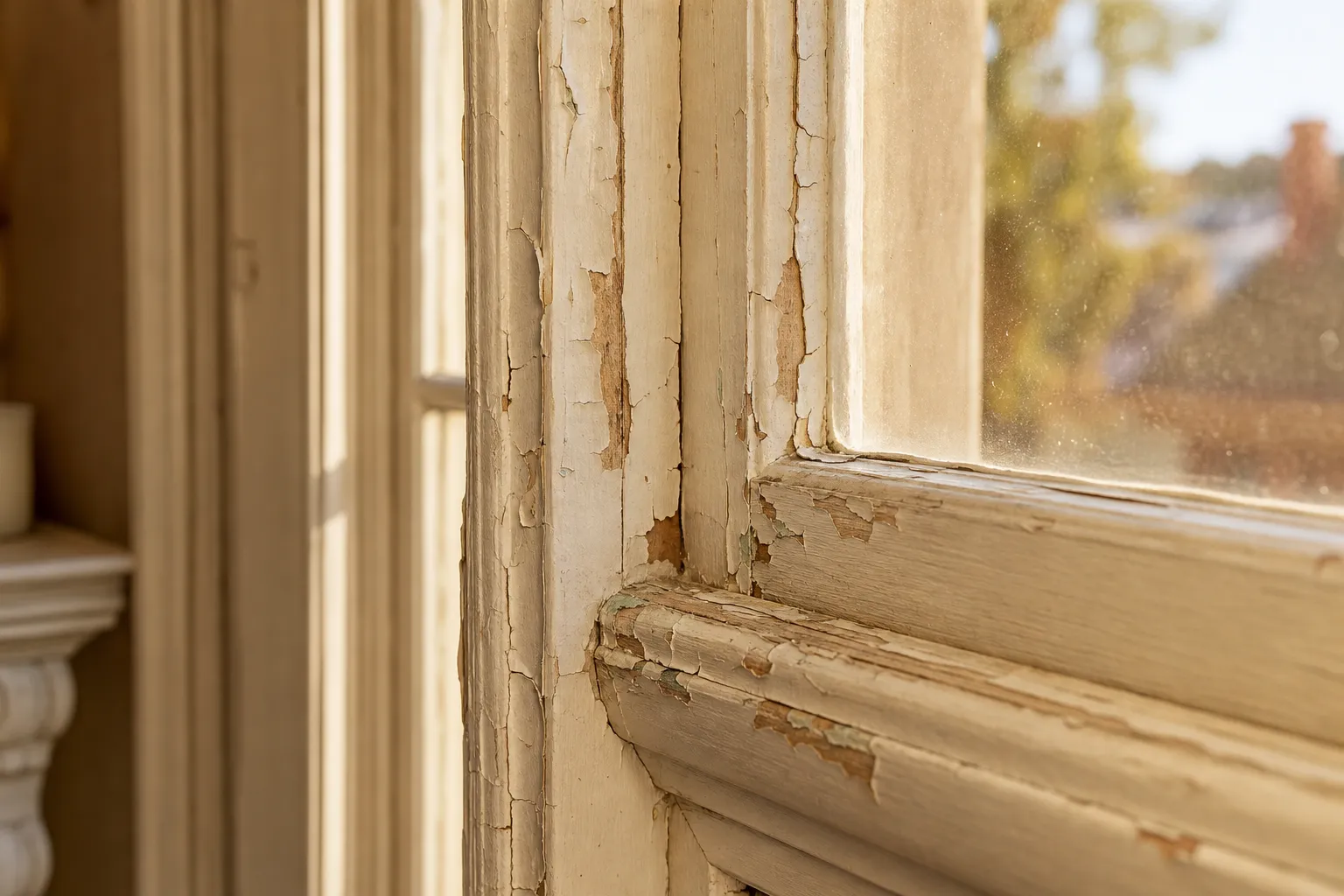
Lead paint is often buried under later coats. Typical places are windows, doors, skirtings, architraves, weatherboards, eaves and verandah timbers.
2How to find out
You cannot tell by looking. Hardware shops sell test kits that change colour in the presence of lead, and laboratories can analyse a paint chip for a definite answer. Test the bottom layers, not only the surface coat, by cutting a small notch through to the timber.
If the house predates 1970 and you are not going to test, treat the paint as if it contains lead.
3What not to do
Lead gets into the body when it is breathed in or swallowed as dust. The methods that make the most dust and fumes are the ones to avoid:
- dry sanding, by hand or machine;
- burning paint off with a blowtorch or overheating it with a heat gun;
- dry scraping and sweeping, which spread dust through the house and garden.
Victoria's Better Health Channel explains the health effects of lead exposure and why children are most at risk.
4Repainting safely
If the old paint is sound, the simplest safe option is often to leave it in place, wash it, and paint over it. Where paint must come off, the Lead Alert guide sets out a step-by-step approach. In summary:
- keep children, pregnant women and pets away from the work area;
- cover floors and the ground outside with plastic sheeting and seal off the room;
- use wet methods, such as wet sanding and wet scraping, and wear a suitable respirator;
- clean up with wet wiping and a suitable vacuum, never a dry broom;
- bag the waste and wash work clothes separately.
For large areas or badly deteriorated paint, hire a painter experienced in lead paint work. See hiring a painter in Victoria for the questions to ask.
?Readers ask
Is it safe to live with lead paint?
Sound, intact paint that is not being chewed, rubbed or disturbed is not the main risk. Flaking paint and renovation dust are.
Does new paint contain lead?
Paint sold for homes in Australia today is tightly limited in lead content. The concern is with old coatings.
Should my family be tested?
If you think someone has been exposed during renovation, speak to a doctor. A blood test measures lead levels.
Sources
Drop Sheet publishes general information for Victoria. It is not legal, building or health advice, and rules change. Confirm anything that matters with the official source or a qualified professional.